

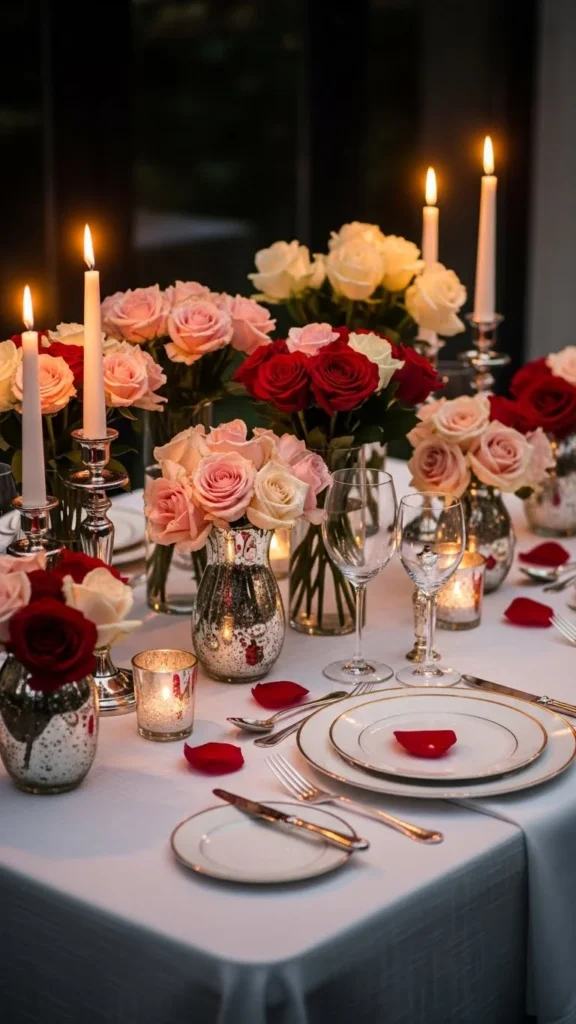
Romantic tables often rely on flowers to set the tone, and roses remain the most trusted choice. Their shape, color range, and familiarity make them easy to style across casual dinners and special evenings. A thoughtfully arranged rose bouquet can guide the entire table look without demanding expensive extras. The ideas below focus on rose bouquets that feel refined yet realistic, offering simple ways to style romance using items you can find, reuse, or assemble at home.
Single-Stem Rose Cluster in a Clear Vase
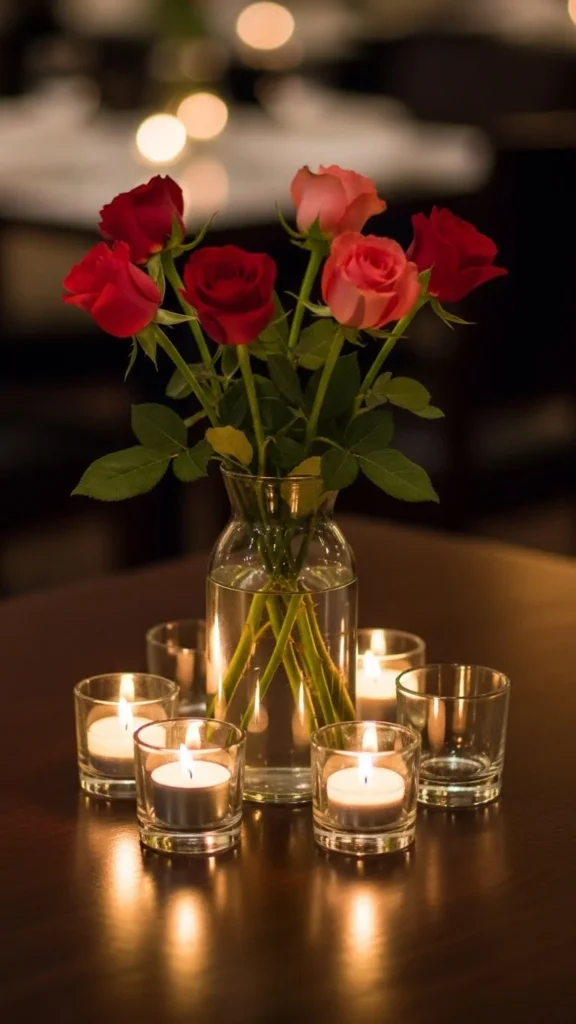
Single-stem roses grouped together create a clean and intentional look. This style works well for intimate dinners where space matters. A clear vase keeps attention on the roses rather than the container.
To keep costs down, buy individual stems instead of pre-made arrangements. Trim them to slightly different heights so the bouquet feels relaxed. Even grocery store roses work here when grouped tightly.
Place this bouquet in the center and keep other decor low. A few candles nearby are enough. This approach suits small tables and leaves room for plates and shared dishes. The simplicity helps the roses stand out without competing details.
Blush Rose Bouquet With Soft Greenery
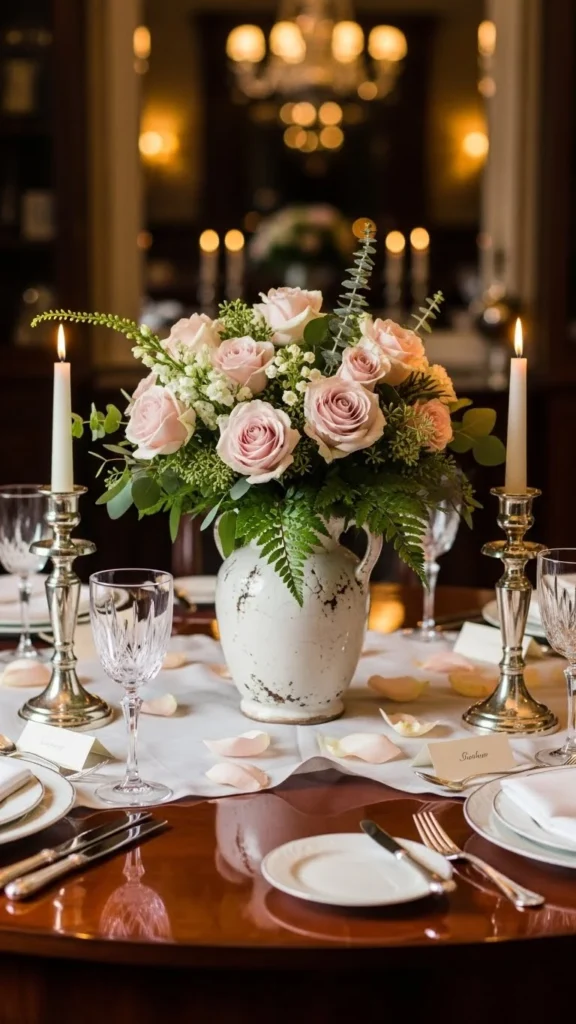
Blush roses feel gentle and romantic without overpowering the table. Adding light greenery gives the bouquet shape and fullness.
You don’t need specialty greens. Eucalyptus or simple foliage from a garden works well. Keep the greenery loose so the roses remain the focus.
This bouquet pairs nicely with neutral tableware. Linen napkins or cream plates support the soft color palette. If blush roses cost more in your area, mix fewer roses with more greenery to fill the vase. The result still feels thoughtful and balanced.
Deep Red Roses in a Low Bowl
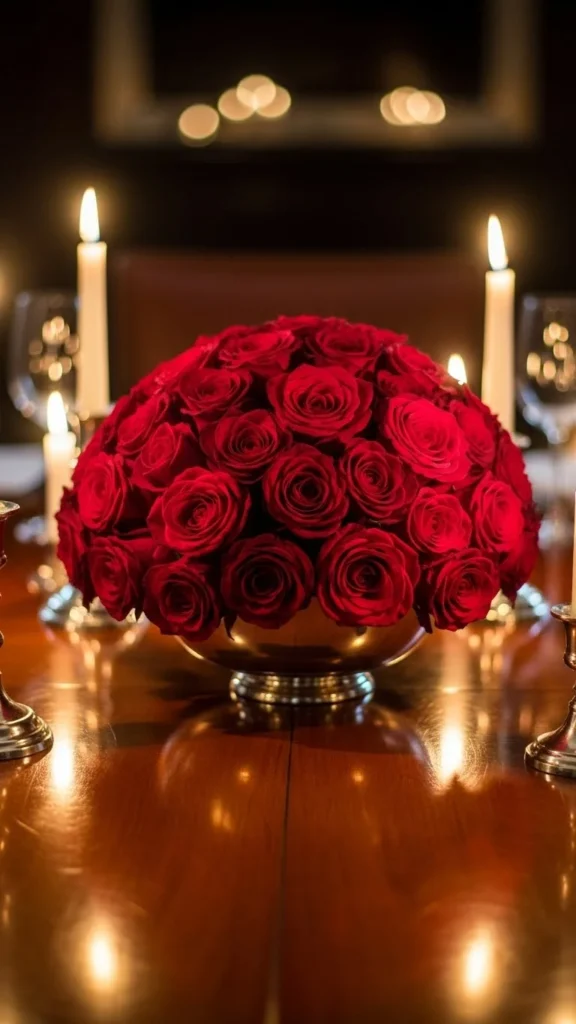
Low bowls work well when guests face each other. Deep red roses arranged close together create a strong visual anchor without blocking views.
Use floral foam or a small dish inside the bowl to hold stems in place. This keeps the arrangement tidy even if the table shifts.
This style works for evening dinners where candles are nearby. Keep everything else simple so the roses carry the mood. Even a small number of roses can feel full when placed close together.
Mixed Red and Ivory Rose Bouquet
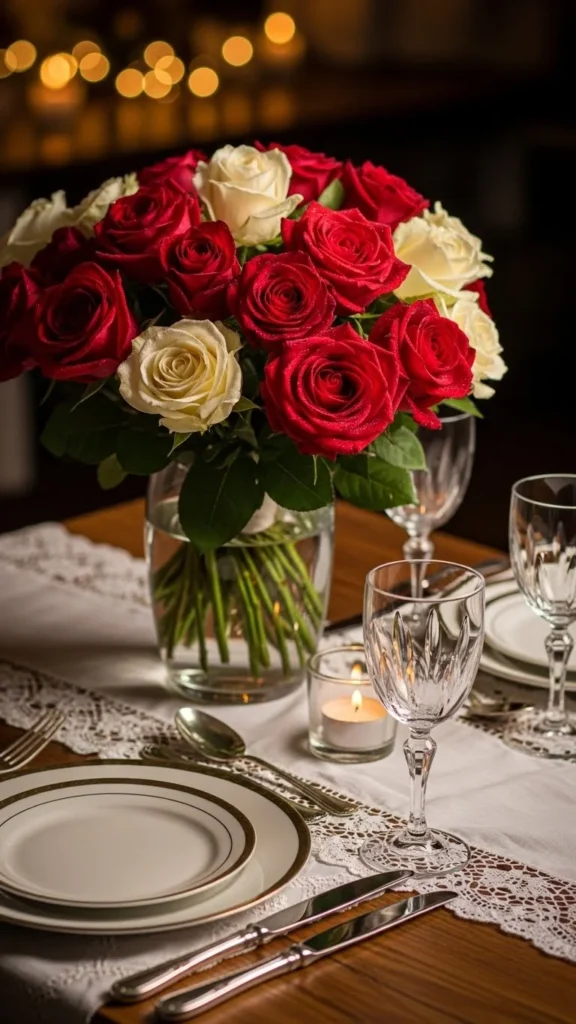
Mixing red and ivory roses softens the intensity of red while keeping the romantic feel. This combination works well for tables that already have darker elements.
You can adjust the ratio to match your style. More ivory feels lighter, while more red feels dramatic. Keep stems trimmed evenly for a clean shape.
This bouquet works well with gold or neutral accents. It feels classic without appearing dated. Buying two small bunches and combining them often costs less than one large pre-arranged bouquet.
Garden-Style Rose Bouquet
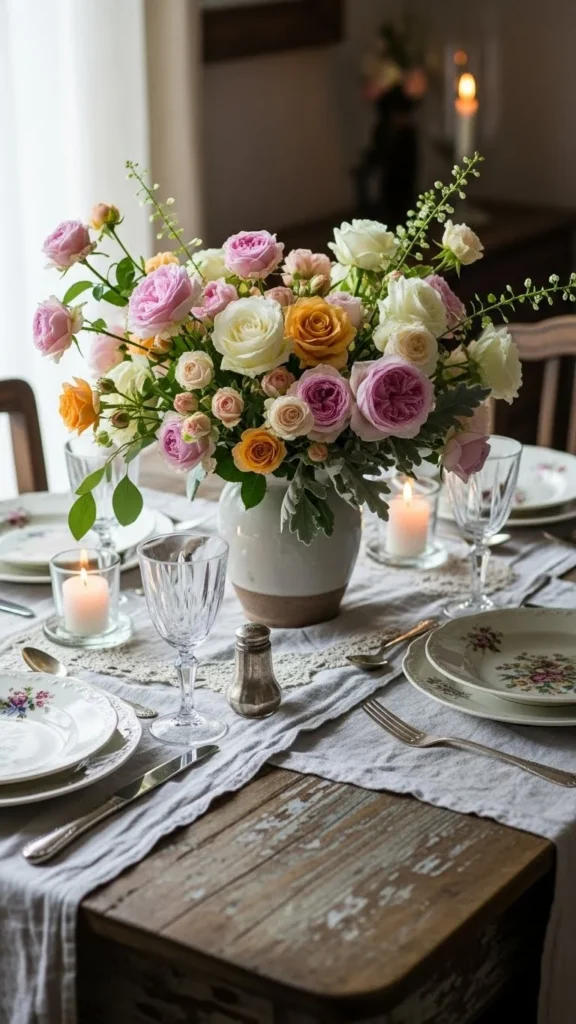
Garden-style bouquets feel relaxed and natural. Different rose sizes and slight spacing give the arrangement an easy look.
You can recreate this style at home by avoiding tight symmetry. Let some stems sit higher than others. Add a few leaves for movement.
This approach suits casual romantic dinners where comfort matters. It works well with wooden tables and simple place settings. Garden-style arrangements hide imperfections, making them ideal for DIY styling.
Compact Rose Arrangement for Two
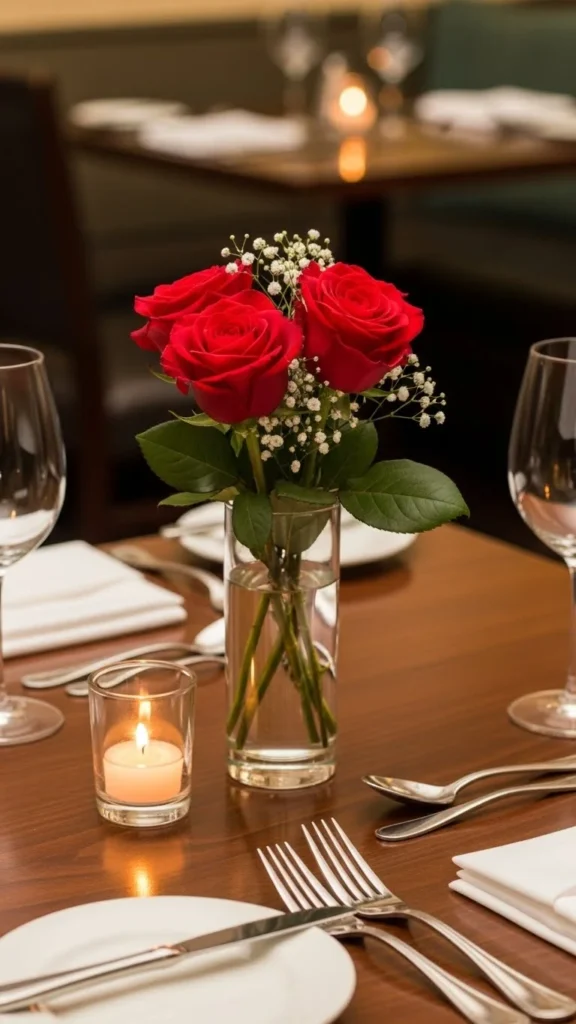
For a table set for two, smaller arrangements feel more personal. A few roses placed closely create intimacy without clutter.
Use a short vase or even a glass tumbler. Trim stems low so the bouquet stays grounded.
This option is budget-friendly and quick to assemble. It keeps the table clear for food and conversation. Small details like this often feel more thoughtful than oversized arrangements.
Rose Bouquet With Candles Framed Around
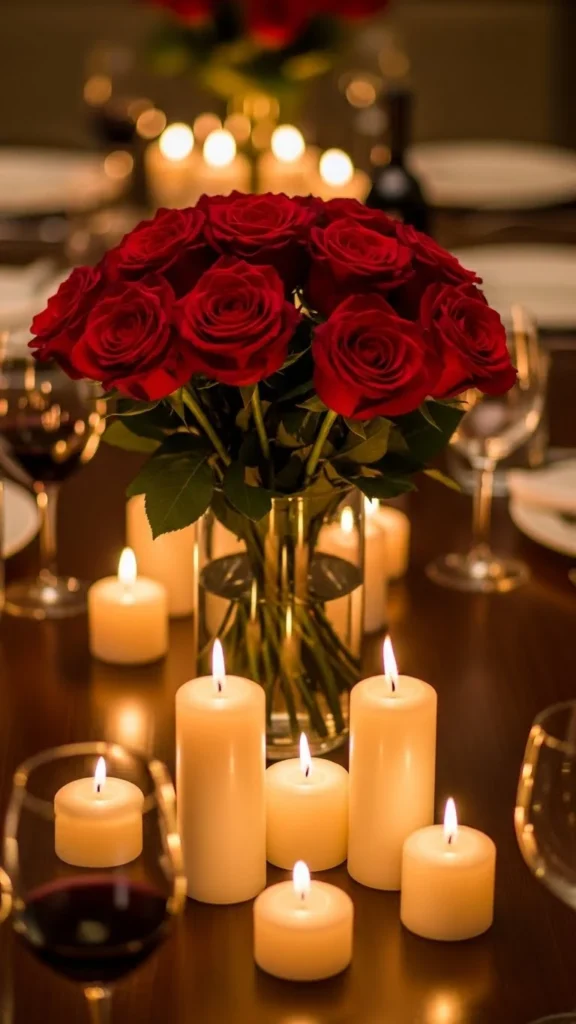
Placing candles around a rose bouquet draws attention to the center of the table. The light highlights petals and adds warmth.
Keep candles low and evenly spaced. This avoids crowding and keeps the arrangement practical.
You can use simple white candles to avoid visual noise. The roses remain the main focus. This setup works well for evening meals and special celebrations.
Pale Pink Roses in a Stone Vase
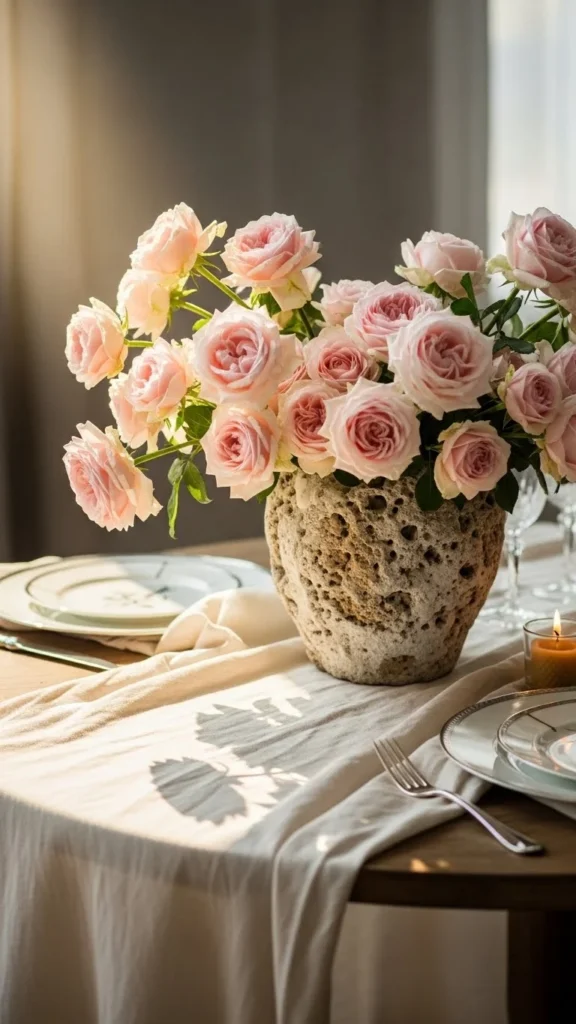
A stone or ceramic vase adds weight and contrast to soft pink roses. The mix feels grounded and calm.
This style works well in neutral interiors. The vase can be reused year-round with different flowers.
If stone vases are hard to find, ceramic pots work just as well. Keep the bouquet medium-sized to maintain balance on the table.
Red Roses With Tied Ribbon Detail
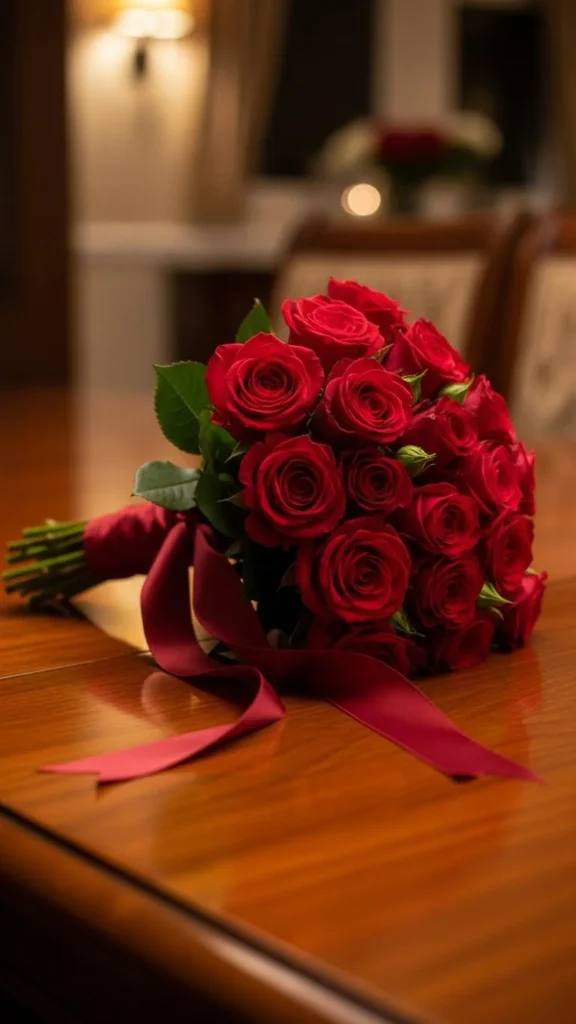
A ribbon tied around the stems adds charm without much effort. It works especially well for hand-tied bouquets placed in simple containers.
Use ribbon you already own. Neutral or soft tones keep the look refined.
This detail suits smaller tables or side placements. It adds a finished touch without extra decor.
Rose Bouquet in a Vintage Glass Vase
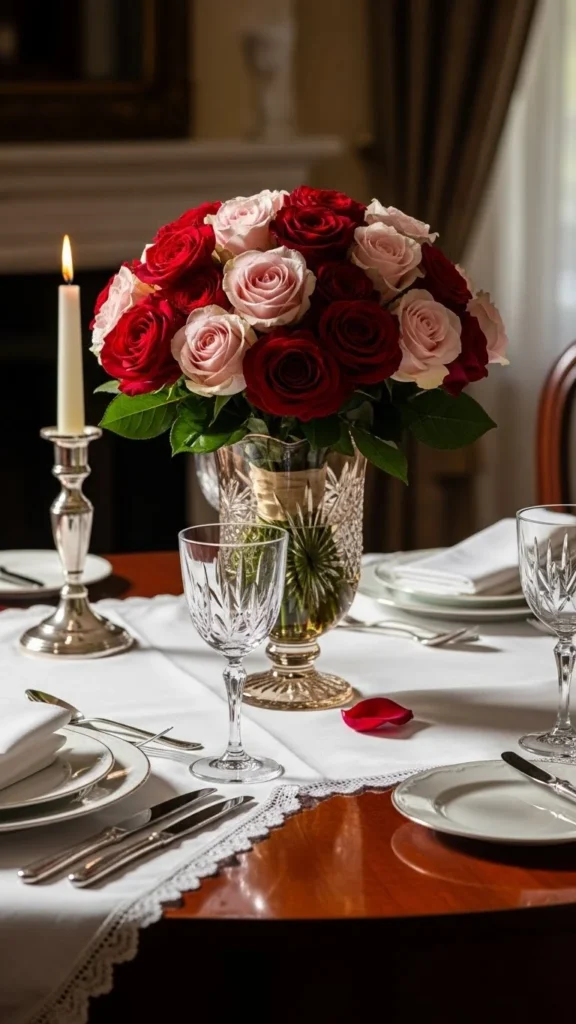
Vintage glass adds texture and interest. It pairs well with roses because it doesn’t compete for attention.
Look for thrifted vases or reuse old glassware. Imperfections add character.
This style works well for romantic dinners with a nostalgic feel. Keep the bouquet size moderate to avoid visual clutter.
White Roses With Soft Pink Accents
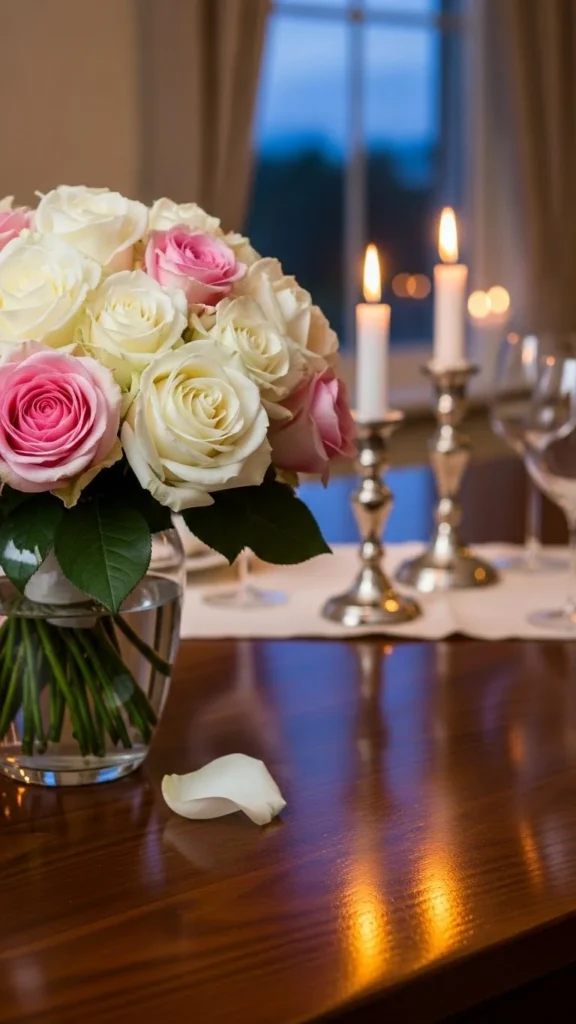
White roses feel calm and refined. Adding a few pink roses brings warmth and variation.
This combination suits bright spaces and daytime meals. It keeps the table light and inviting.
Mixing colors often costs less than buying one type in bulk. Arrange them evenly for balance.
Rose Bouquet With Natural Linen Table Styling
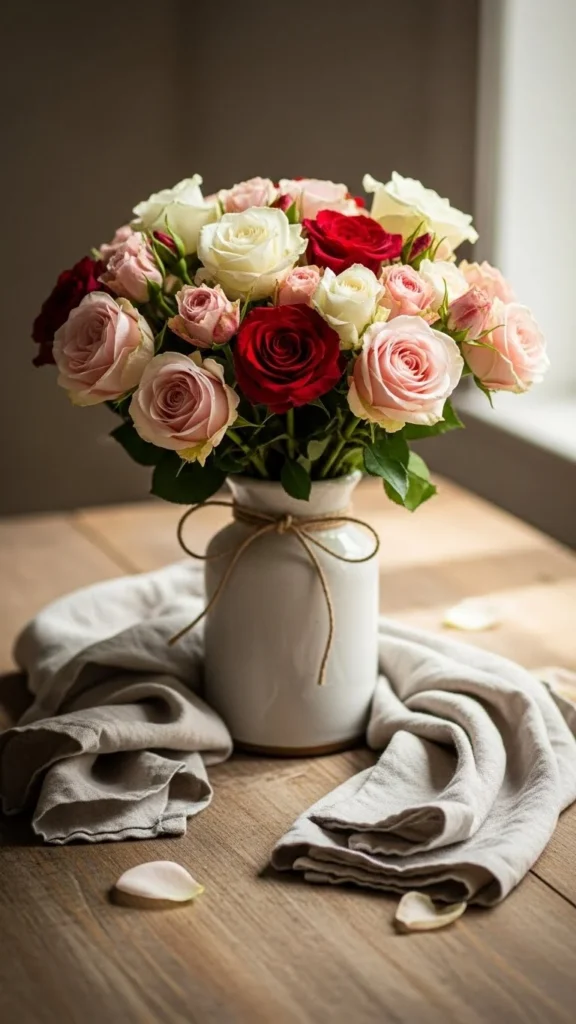
Roses paired with linen feel relaxed and romantic. The textures work together without feeling staged.
Use neutral linens so the roses stand out. This pairing suits home settings where comfort matters.
Even simple roses feel special when the surrounding table is calm and cohesive.
Small Rose Bouquets Along a Long Table
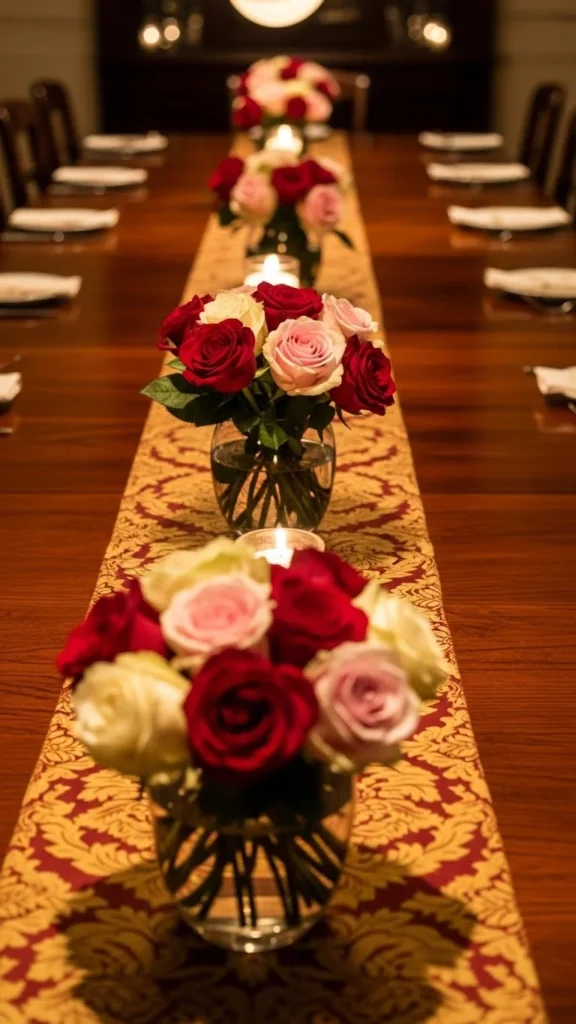
Instead of one large bouquet, use several small ones. This keeps sightlines clear and spreads color evenly.
You can use fewer roses per vase to manage cost. Consistency matters more than size.
This setup works well for gatherings with more guests. It feels intentional without feeling heavy.
Rose Bouquet With Glass Cloche
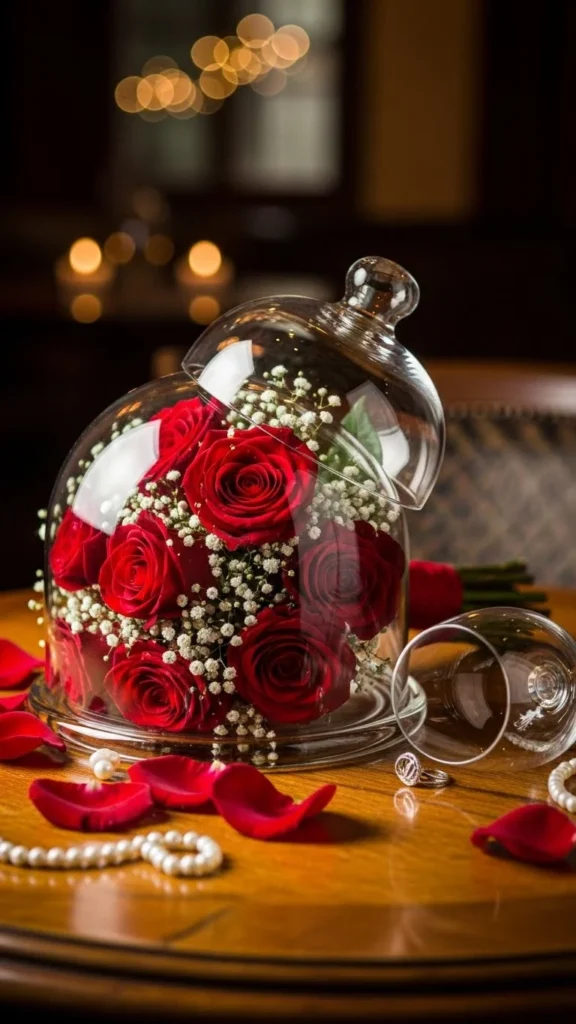
A glass cloche adds drama and focus. It works best with compact arrangements.
Use the cloche as a focal piece rather than covering all flowers. This keeps the table usable.
This idea suits special occasions where one detail takes center stage.
Dried and Fresh Rose Mix
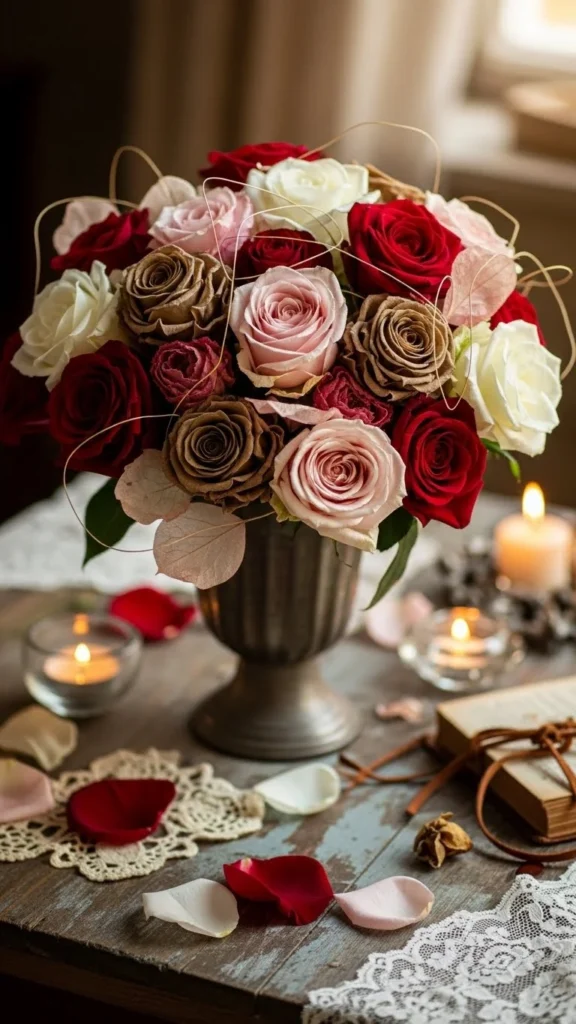
Mixing dried roses with fresh ones adds texture and extends the bouquet’s life. It also reduces the number of fresh stems needed.
Use dried elements sparingly. They support the fresh roses without drawing attention away.
This approach works well for longer events or when you want the arrangement to last beyond one evening.
Rose Bouquet With Minimal Green Accents
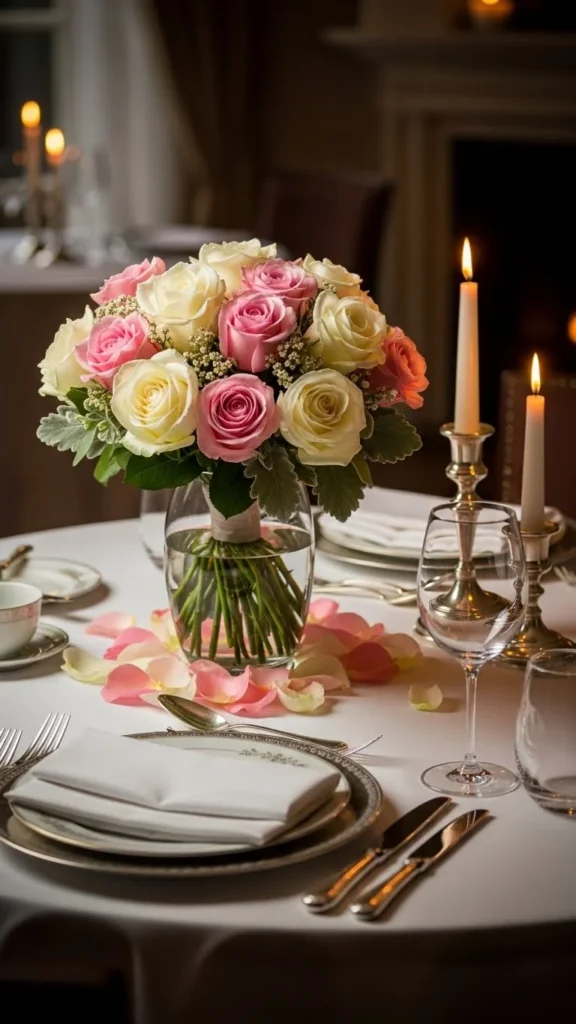
Minimal greenery keeps roses as the focus. A few leaves add structure without distraction.
This style suits tables with patterned dishes or textured linens. The bouquet stays calm and supportive.
It’s easy to assemble and works with limited materials.
Centered Rose Bouquet on a Round Table
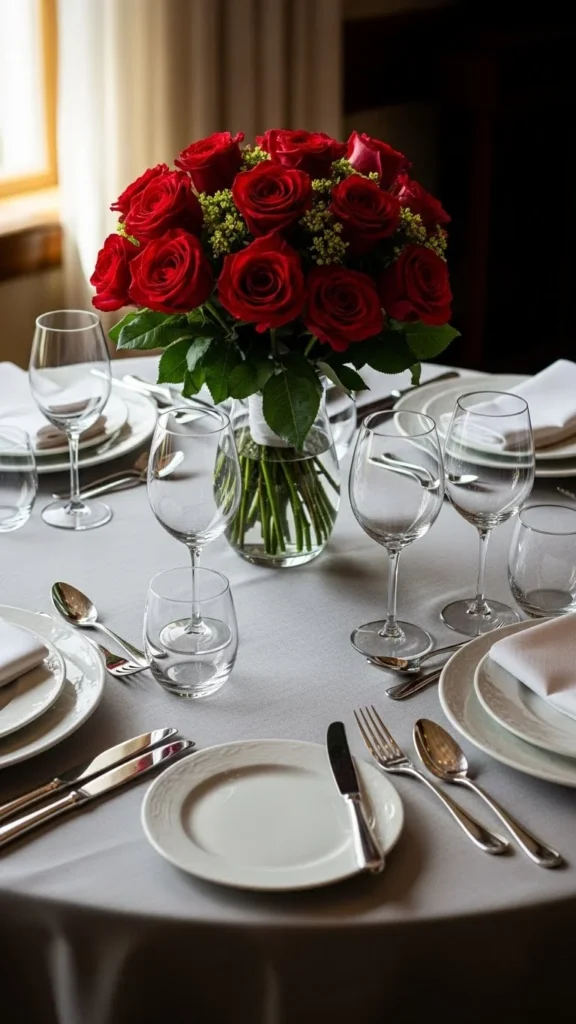
Round tables benefit from centered arrangements. A rose bouquet anchors the space and guides placement.
Keep the height moderate so everyone can see across the table. Use a stable vase to avoid tipping.
This layout feels balanced and shared, ideal for intimate gatherings.
Rose Bouquet With Neutral Candle Holders
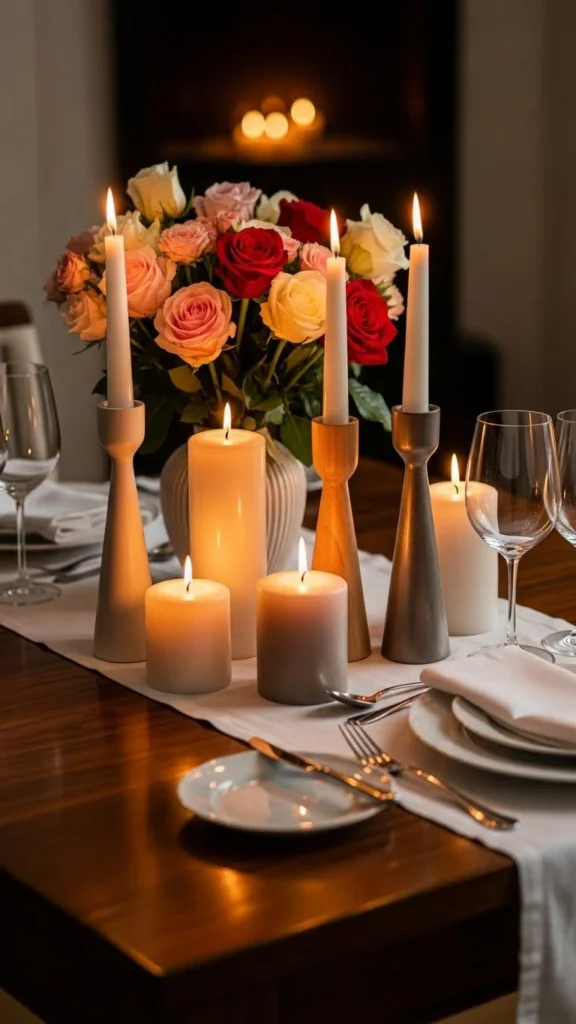
Neutral candle holders support the roses without competing. The focus stays on flowers and light.
This pairing works for both day and night settings. It’s easy to adapt with items you already own.
Keep spacing even to maintain a calm table layout.
Roses in a Simple Ceramic Pitcher
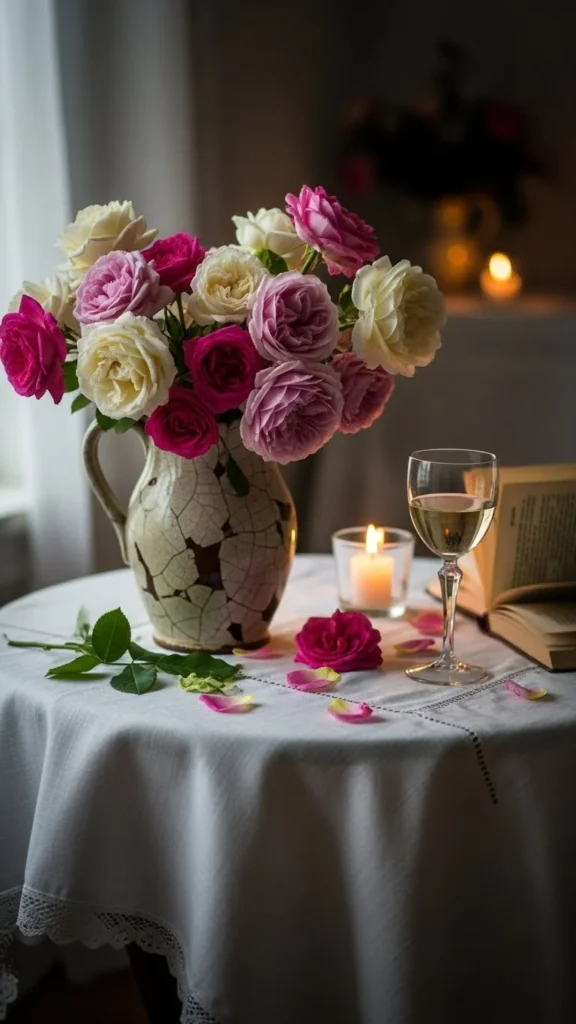
A ceramic pitcher feels approachable and warm. It works well for casual romantic meals.
Use what you have. Even kitchen pitchers can hold flowers beautifully.
This style feels natural and unfussy, perfect for home settings.
Short-Stem Roses for Low Tables
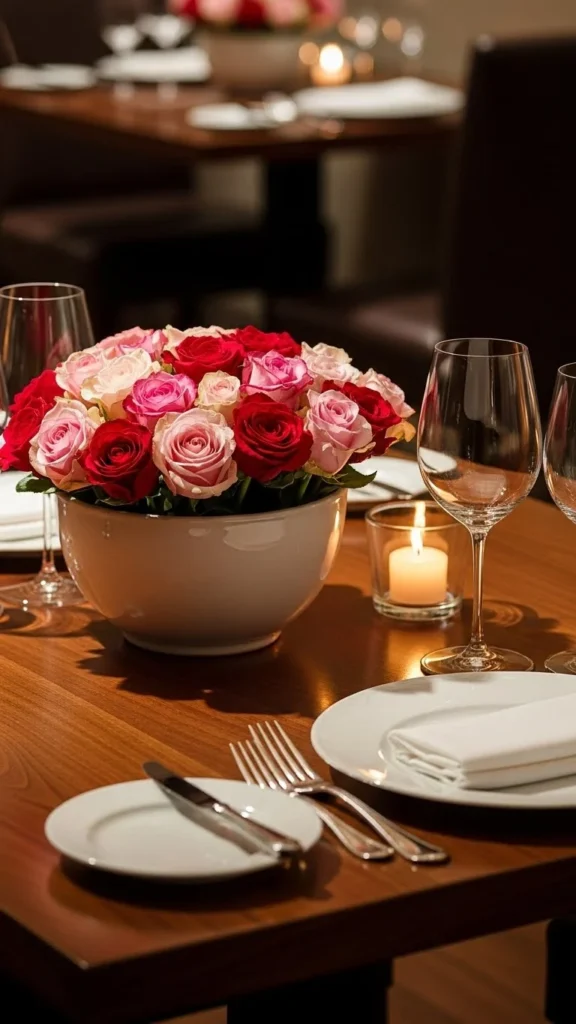
Short stems keep arrangements low and practical. They suit coffee tables or low dining setups.
Trim stems generously and group roses closely.
This approach uses fewer flowers while maintaining presence.
Rose Bouquet With Soft Fabric Underlay
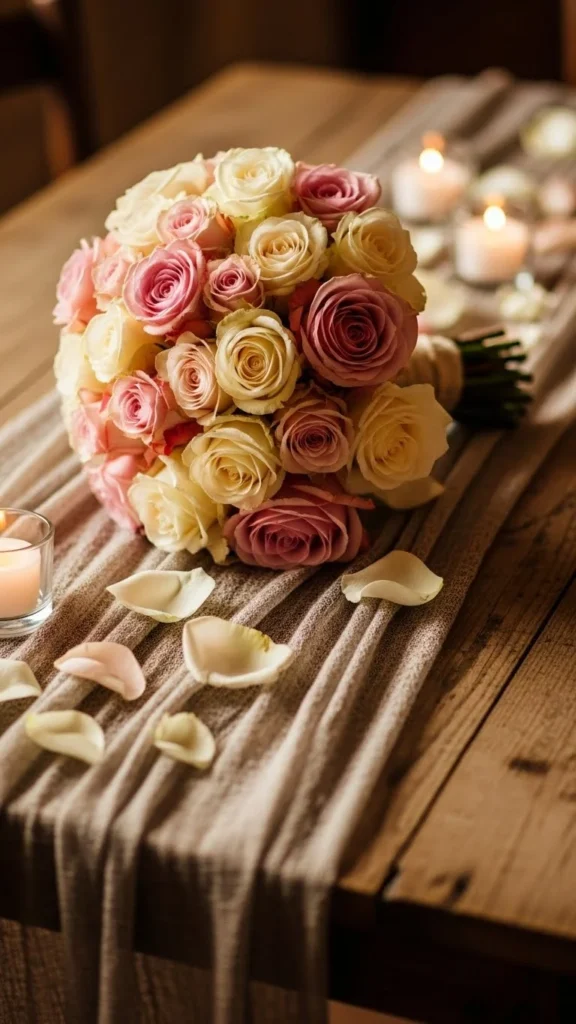
Placing the bouquet on folded fabric adds depth. It frames the flowers without adding objects.
Use scarves or fabric scraps you already own. Keep colors neutral.
This detail adds interest without cluttering the table.
Rose Bouquet With Seasonal Accent Pieces
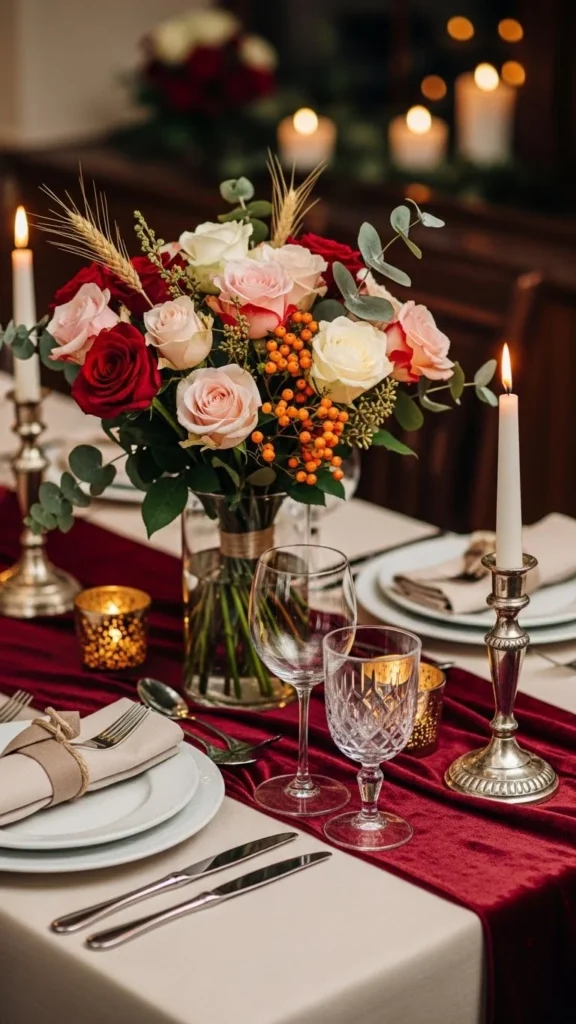
Small accents like stones or decorative pieces can support the bouquet.
Use them sparingly so the roses remain central.
This idea works when you want a themed table without heavy decor.
Monochrome Rose Bouquet
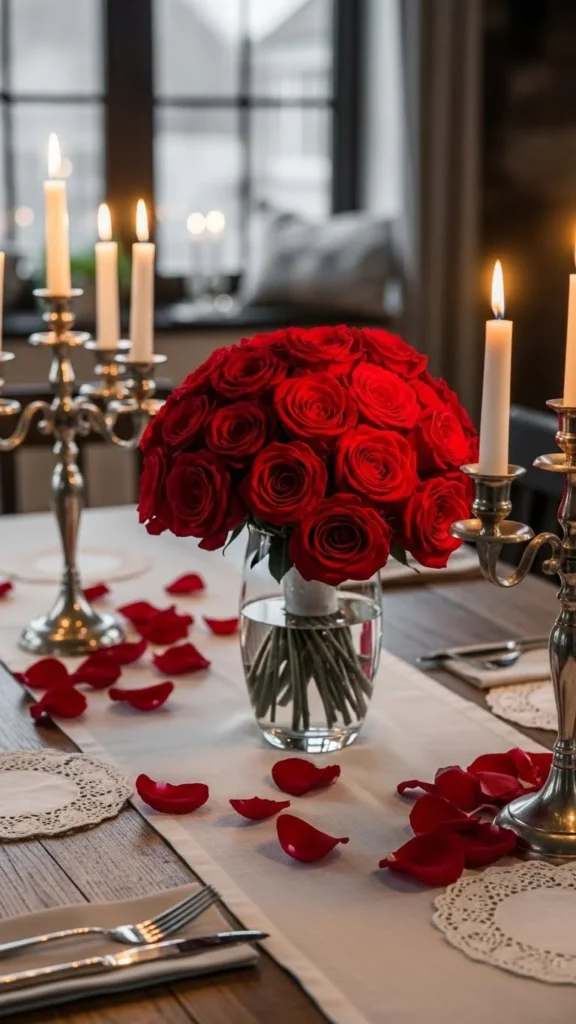
Using one shade creates a calm and cohesive look. It feels refined and intentional.
You can choose any shade based on availability. Grouping similar tones often costs less.
This style pairs well with simple tableware.
Rose Bouquet With Personal Place Cards Nearby
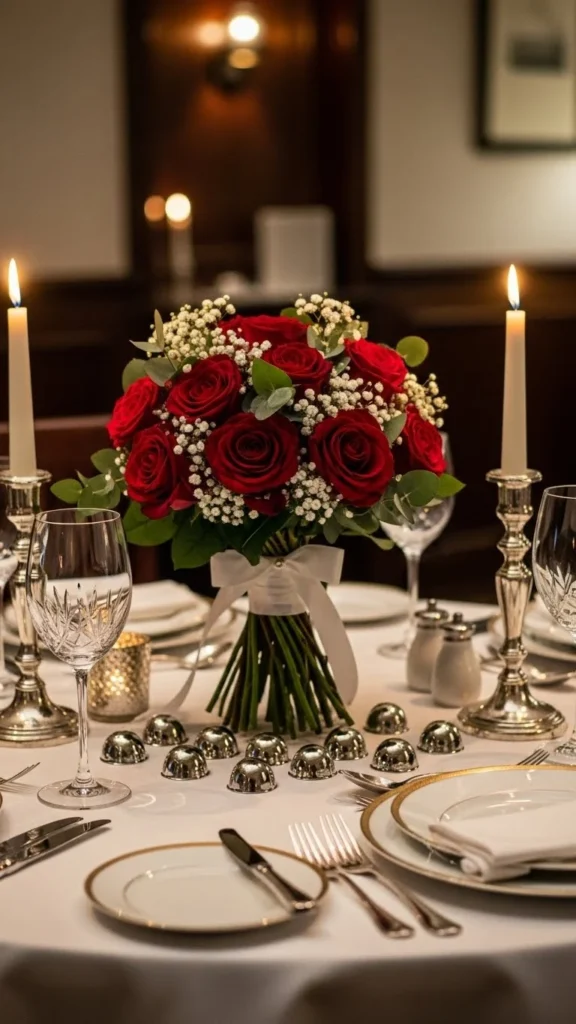
While the bouquet stays central, small personal touches nearby add warmth.
Keep cards minimal so they don’t distract from the flowers.
This approach suits special dinners and celebrations.
Rose Bouquet With Glass and Metal Mix
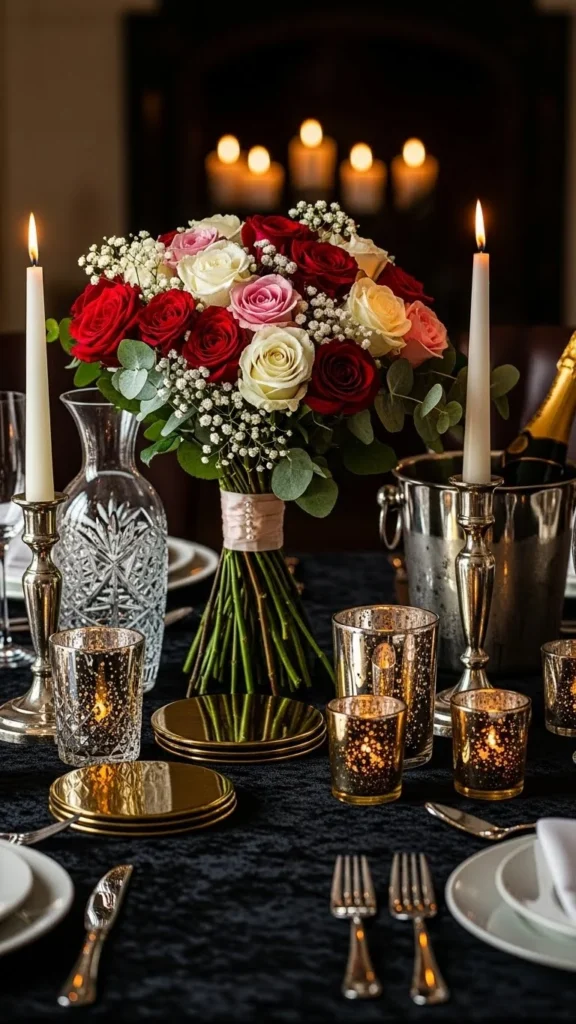
Glass and metal elements reflect light around the roses. This adds depth without extra color.
Use what you already have. Consistency matters more than matching sets.
This setup works well for evening settings.
Petite Rose Bouquet for Side Tables
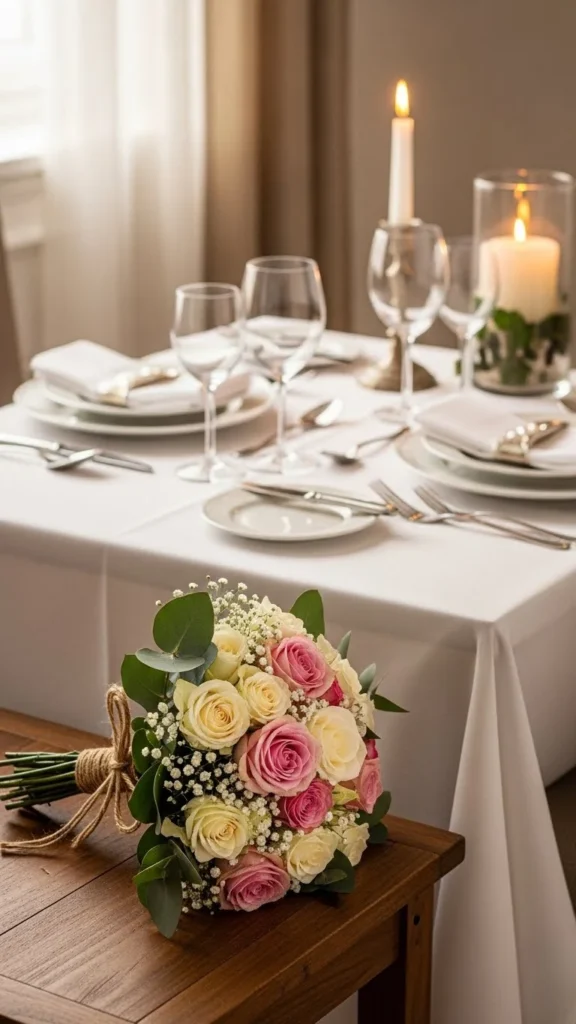
Side tables offer extra space for flowers without crowding the dining surface.
Small bouquets here support the main table visually.
This is helpful when the dining table is tight on space.
Rose Bouquet With Soft Neutral Surroundings
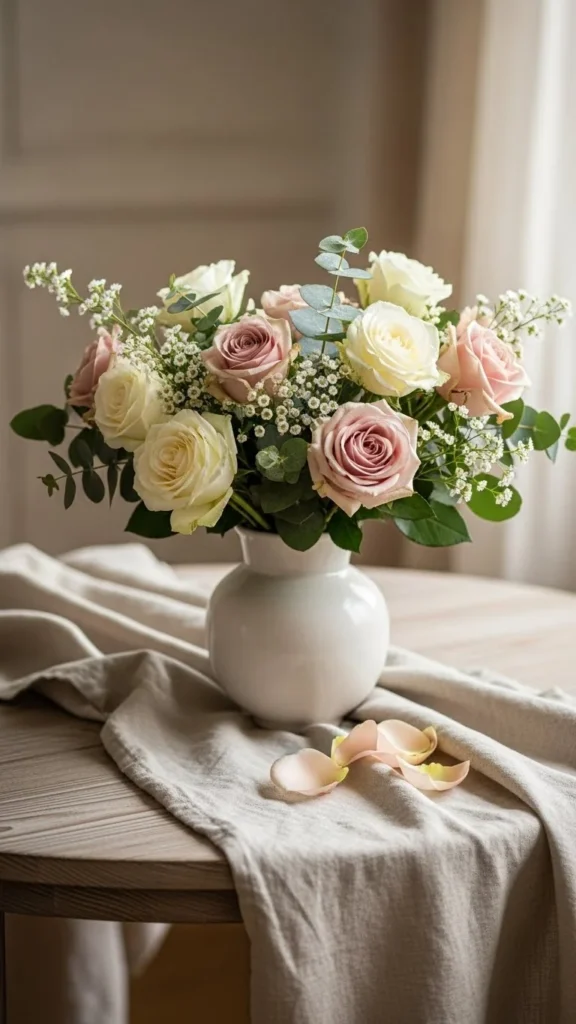
Neutral surroundings help roses stand out naturally. The table feels calm and intentional.
This approach works with minimal effort. Focus on balance rather than quantity.
The roses become the clear focal point.
Conclusion
Rose bouquets remain one of the most reliable ways to shape a romantic table. With thoughtful placement, simple containers, and realistic flower counts, they can guide the mood without excess effort or cost. Whether styled low, grouped, or spread across the table, roses bring warmth and familiarity that feels personal. Choose one approach that fits your space, work with what you already have, and let the flowers quietly support the moment.
Leave a Reply