

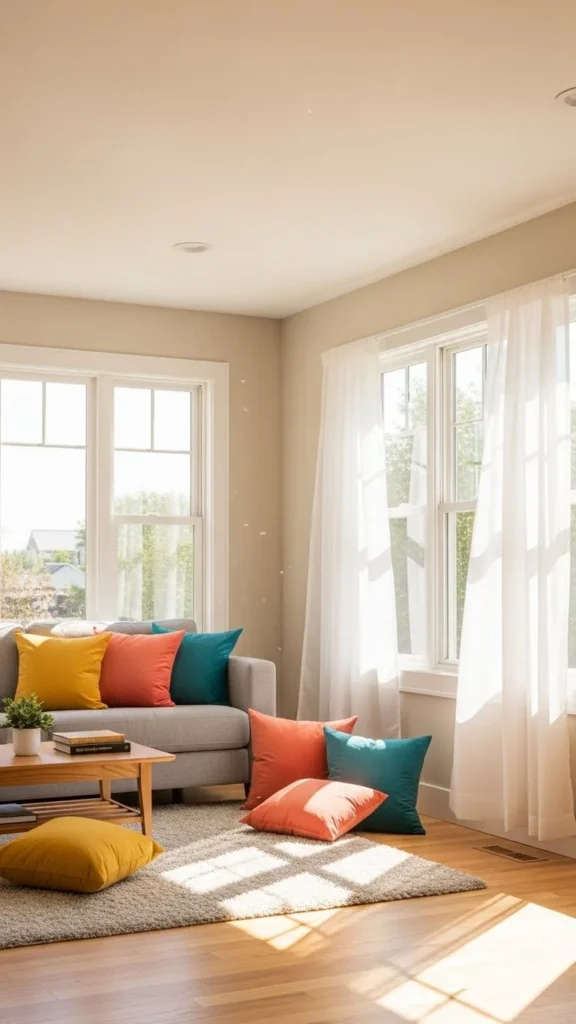
Neutral rooms are like blank canvases—they offer endless possibilities but can sometimes feel a little… bland. Adding color doesn’t mean overwhelming the space with bright hues. It’s about thoughtful pops, layers, and accents that make the room feel lively, personal, and visually appealing. Whether you’re decorating a living room, bedroom, or office, these tips will help you inject color into a neutral palette without sacrificing sophistication.
1. Start with Colorful Accents
The easiest way to introduce color is through small, interchangeable accents. Think throw pillows, blankets, rugs, and decorative objects.
- Pillows & Throws: Layer pillows in complementary colors or patterns. Swap them seasonally for variety.
- Rugs: A bold rug can anchor a space and add warmth.
- Art & Accessories: Display colorful vases, lamps, or framed prints.
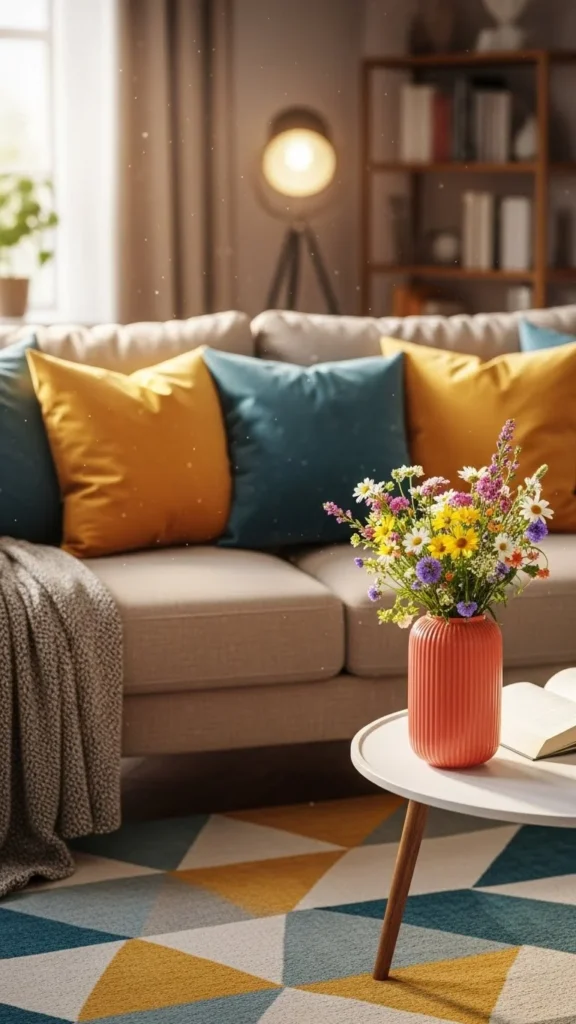
2. Play with Artwork
Art is a powerful way to bring personality and color into a neutral room. It doesn’t have to be expensive or huge; even small pieces can make a big impact.
- Create a gallery wall with colorful prints or paintings.
- Use art to introduce a color scheme that you can repeat in accessories.
- Mix textures—canvas, framed prints, or sculptural pieces—for visual interest.
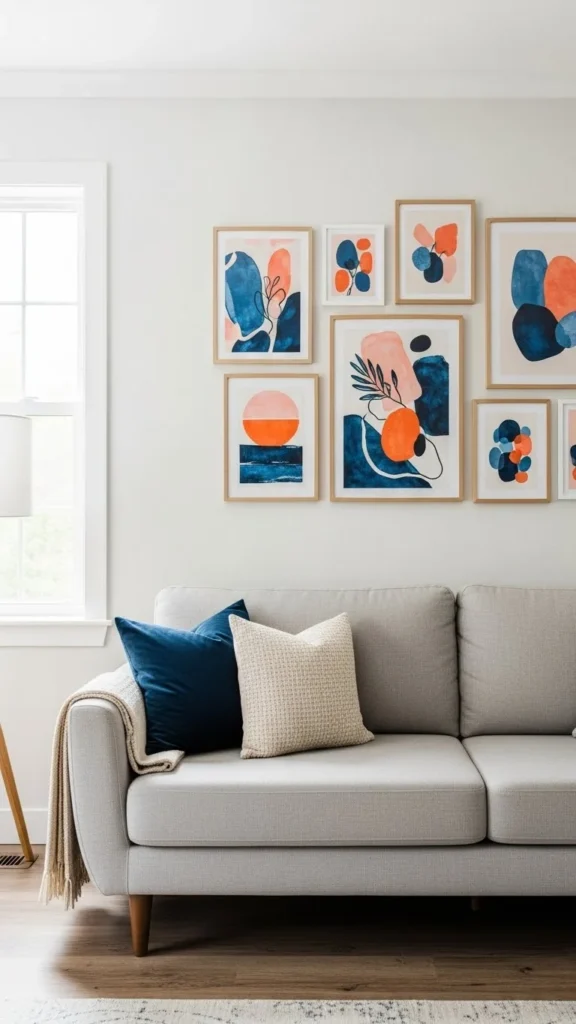
3. Introduce Natural Elements
Plants and flowers add color and life without overpowering the room. They also improve air quality and create a calming atmosphere.
- Indoor Plants: Potted palms, fiddle leaf figs, or succulents bring greenery.
- Fresh Flowers: Seasonal blooms in vibrant colors make any neutral space pop.
- Natural Materials: Woven baskets, wooden bowls, or colorful ceramics add warmth and subtle color.
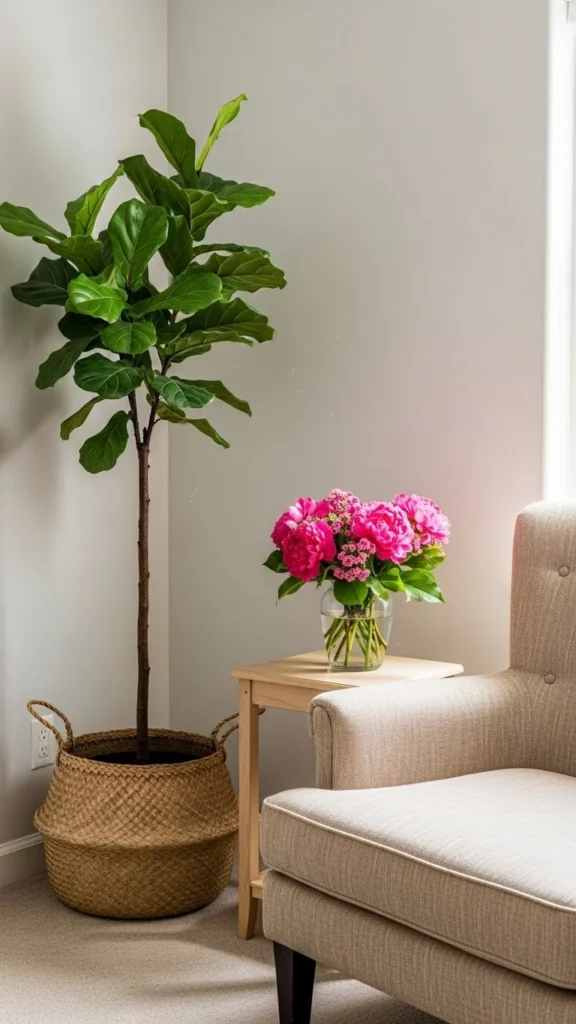
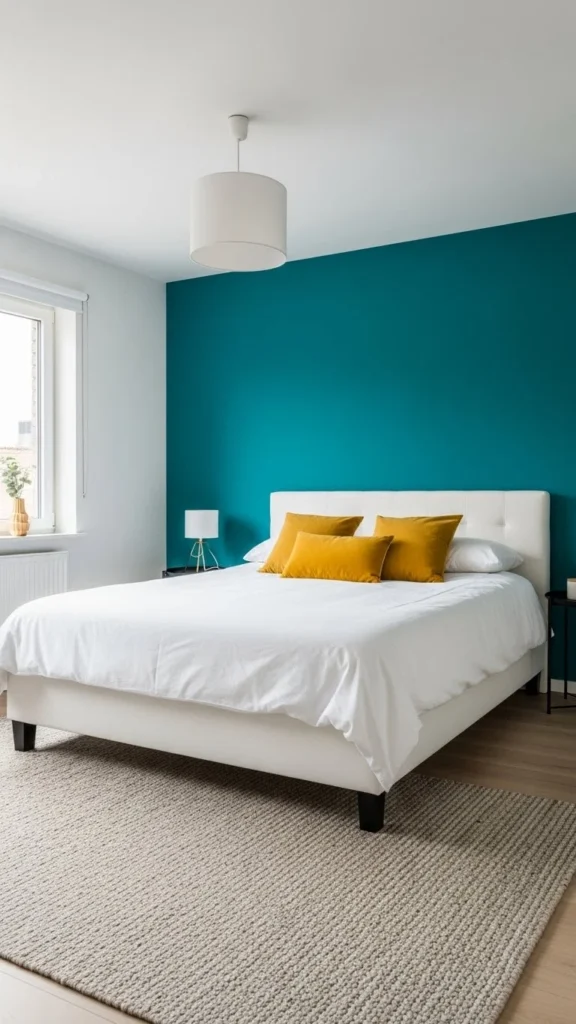
4. Experiment with Accent Walls
Painting a single wall is a bold yet controlled way to introduce color without overwhelming the room.
- Choose a wall that naturally draws attention, like behind a sofa or bed.
- Stick to one color and balance it with neutral tones elsewhere.
- Consider textured paint, wallpaper, or a subtle gradient for added dimension.
5. Use Color in Soft Furnishings
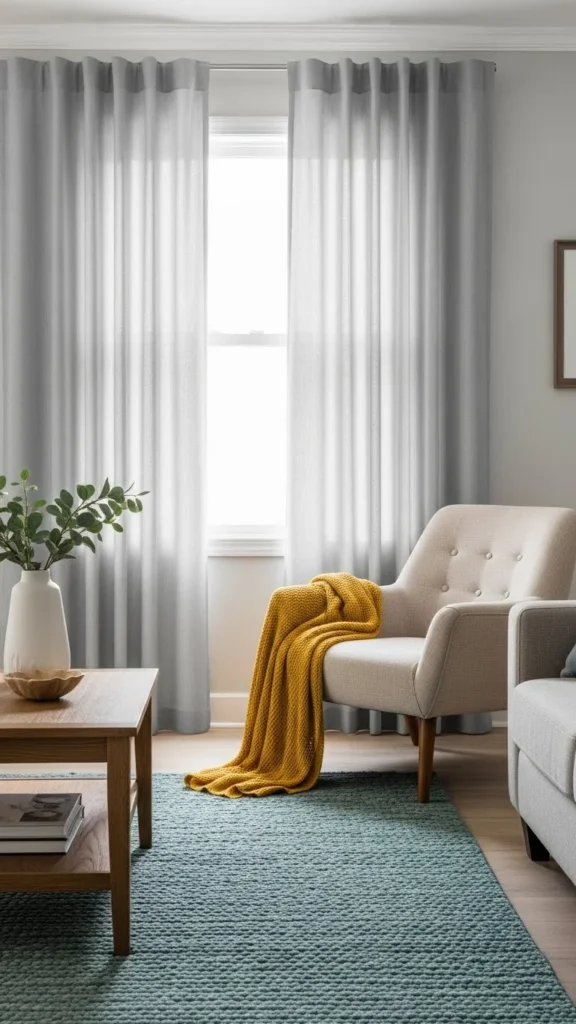
Curtains, bedding, and cushions are functional elements that can bring color into a neutral room.
- Swap neutral curtains for ones in soft pastels or bold tones.
- Add patterned bedding with small pops of color for bedrooms.
- Mix and match textures—velvet, linen, or cotton—for a layered, inviting look.
6. Repeat Colors Strategically
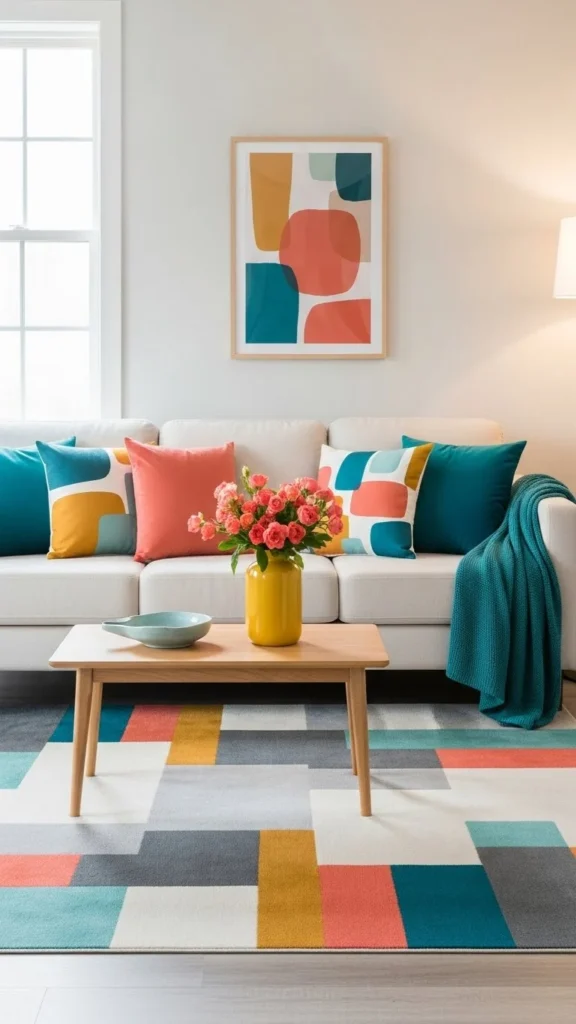
To create a cohesive look, repeat color in multiple spots throughout the room. This helps the space feel intentional rather than random.
- Pick 2–3 main colors to use throughout.
- Repeat them in accessories, art, and textiles.
- Balance bold colors with plenty of neutrals to maintain calmness.
7. Layer with Subtle Hues
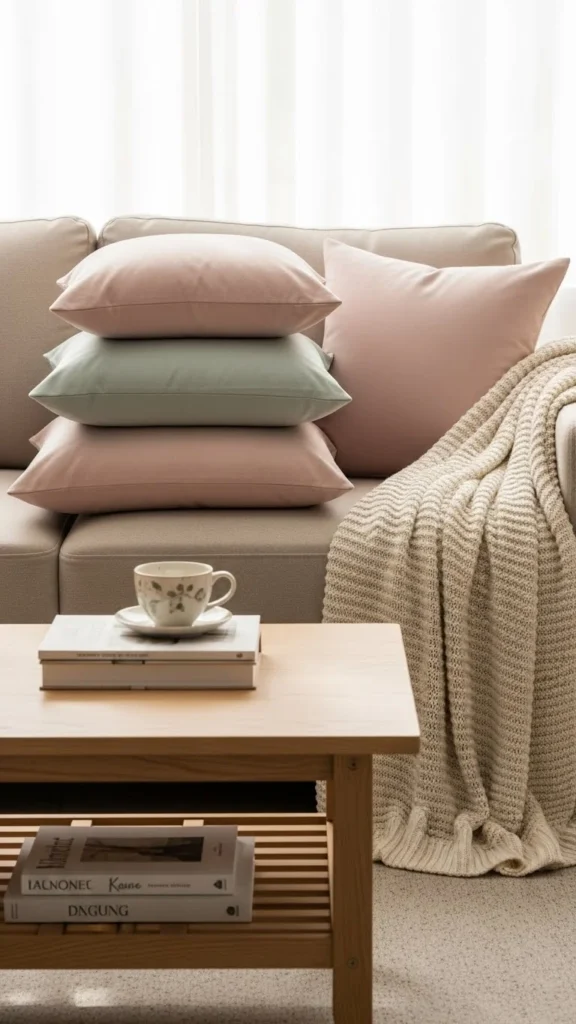
Not all color has to be bright. Muted tones, pastels, and earthy shades can bring warmth without overwhelming the neutral base.
- Dusty pinks, soft blues, and muted greens work beautifully with beige, gray, and white.
- Layer different shades of the same color for depth and interest.
- Combine subtle hues with textured fabrics for a sophisticated feel.
Conclusion
Adding color to a neutral room is all about balance, intention, and layering. From bold accent walls to playful pillows and natural elements, even small touches can completely transform a space. Start with one area, experiment with textures and patterns, and slowly build a cohesive, colorful look that feels inviting and stylish.
Pro Tip: Keep a small color palette in mind and repeat it strategically across the room for harmony. Save these ideas for your next room refresh!

Leave a Reply