

A rug can completely change how a room feels. It can make a space feel warmer, larger, more polished—or instantly pulled together when something feels “off.” Yet rugs are often treated as an afterthought, when they’re actually one of the most powerful design tools in home decor.
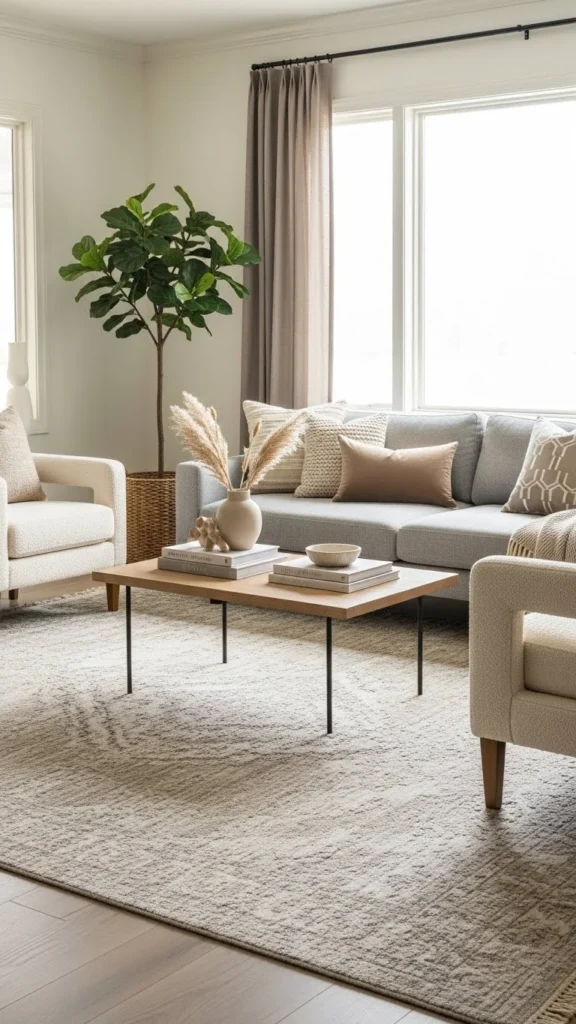
If you’ve ever wondered why a room doesn’t feel finished, the answer is often simple: the rug is missing, too small, or not quite right. Let’s break down how to use rugs intentionally to transform any space in your home.
Start With the Right Rug Size (This Changes Everything)
Rug size is the most common mistake—and the most important detail to get right. A rug that’s too small can make a room feel disconnected, while the right size instantly creates cohesion.
General size guidelines:
- Living room: Front legs of sofas and chairs should sit on the rug
- Dining room: Rug should extend at least 24 inches beyond the table
- Bedroom: Rug should extend past the sides and foot of the bed
- Entryway: Rug should fit the space without blocking doors
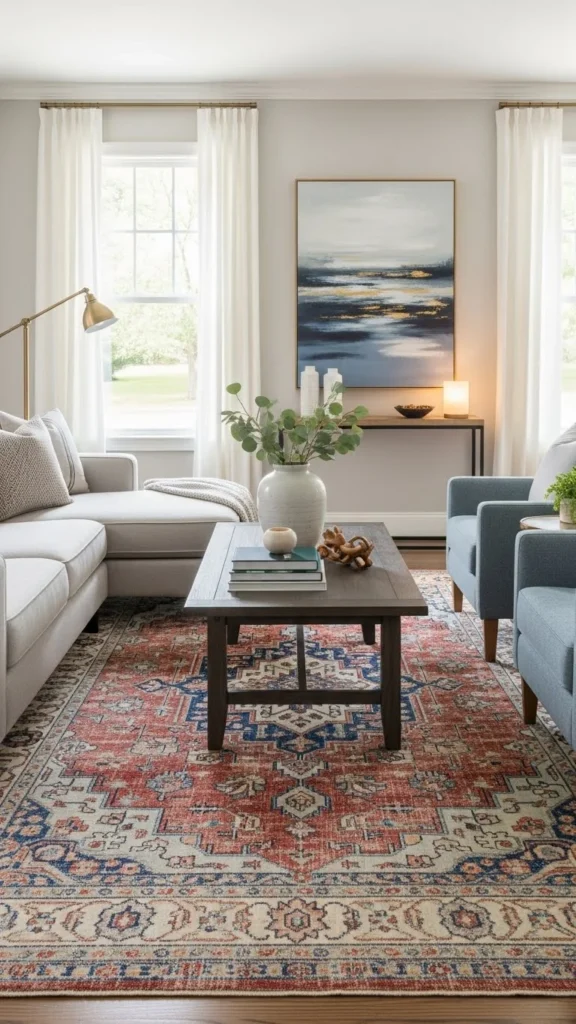
When in doubt, go bigger. A properly sized rug makes a space feel more intentional and visually grounded.
Use Rugs to Define Zones in Open Spaces
In open-plan homes, rugs are essential for creating structure. They visually separate areas without walls.
Use rugs to:
- Define a seating area in a living room
- Separate dining and lounging zones
- Create a workspace within a larger room
Pro tip:
Each zone should have its own rug, but the colors or textures should relate so the space still feels cohesive.
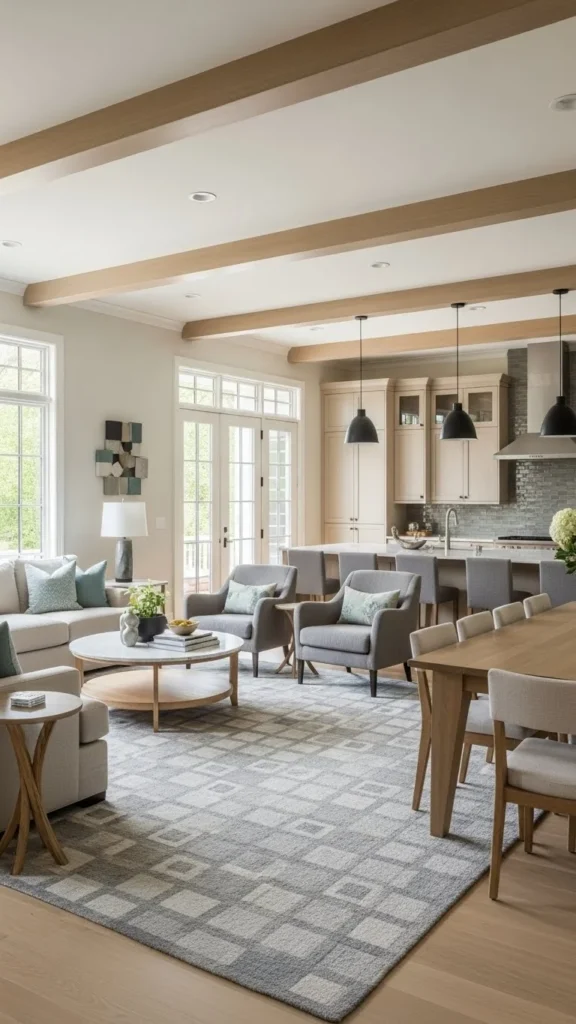
Rugs act like invisible boundaries, guiding the eye and improving flow.
Choose Colors That Support the Mood
Rugs aren’t just decorative—they set the tone of the room.
Color-based rug effects:
- Light rugs make rooms feel airy and spacious
- Dark rugs add depth and coziness
- Neutral rugs create calm and flexibility
- Patterned rugs add personality and movement
If your furniture and walls are neutral, a patterned rug can become the star. If your decor is bold, a subtle rug can ground the space.
Quick rule:
Busy room = simple rug
Simple room = statement rug
Layer Rugs for Extra Depth and Texture
Layering rugs is an easy way to add warmth and dimension, especially in neutral spaces.
How to layer successfully:
- Start with a large neutral base rug
- Add a smaller patterned or textured rug on top
- Keep colors within the same family
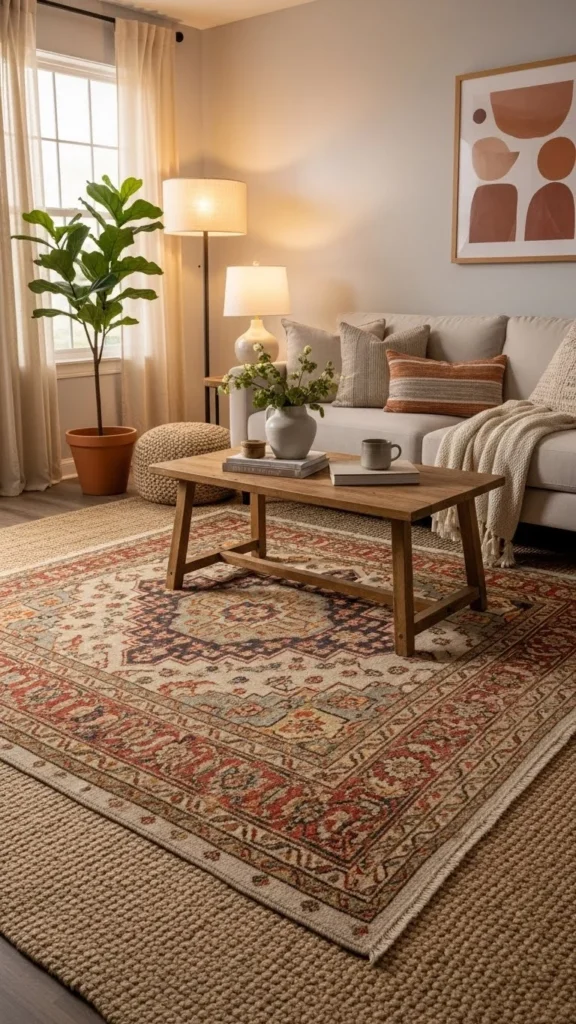
This works beautifully in living rooms, bedrooms, and even home offices—and it adds that “designer” look without much effort.
Match the Rug Material to the Room
Not all rugs belong everywhere. Material matters more than most people realize.
Best rug materials by space:
- Living room: Wool, cotton blends, or low-pile rugs
- Bedroom: Plush or soft pile for comfort
- Dining room: Flatweave or low-pile for easy cleaning
- Entryway: Durable, washable, or natural fiber rugs
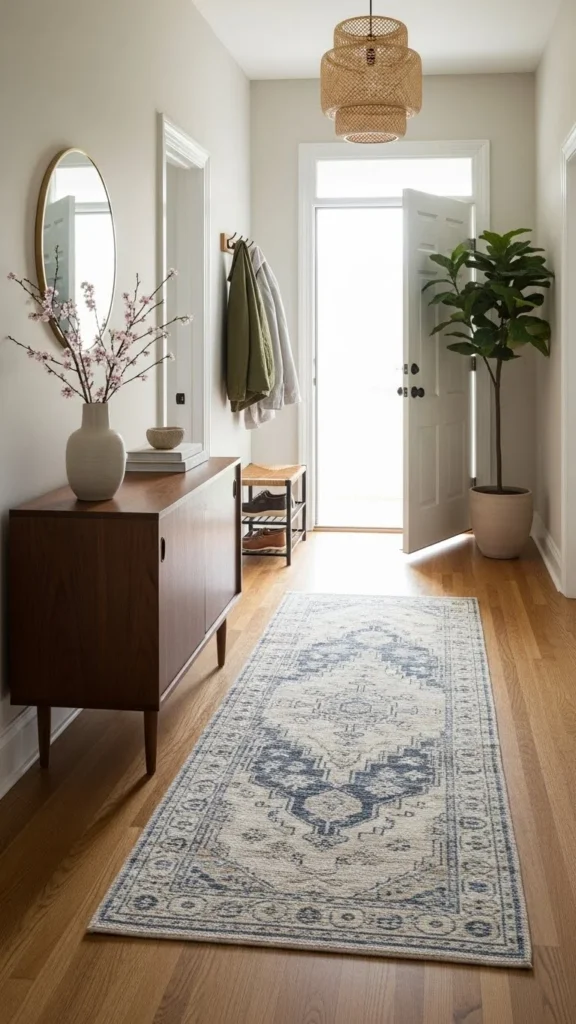
Choosing the right material ensures your rug looks good and lasts longer.
Use Rugs to Balance Furniture and Scale
Rugs help visually connect furniture pieces so they feel like part of the same conversation.
Without a rug:
- Furniture can feel like it’s floating
- The room may look unfinished
With a rug:
- Seating areas feel grounded
- Furniture placement feels intentional
- The room looks complete
Make sure the rug is large enough to touch key furniture pieces—it’s the glue that holds the layout together.
Don’t Be Afraid of Pattern (Just Be Strategic)
Patterns can feel intimidating, but they’re incredibly effective when used thoughtfully.
Tips for using patterned rugs:
- Pair with solid furniture and walls
- Match one or two colors from the rug elsewhere in the room
- Keep patterns low-contrast for a subtle look
If you’re unsure, start with a faded or vintage-style pattern—it adds interest without overwhelming the space.
Refresh a Room Instantly With a Rug Swap
One of the best things about rugs? They’re easy to change.
You can:
- Swap rugs seasonally
- Update a room without repainting
- Try new colors without commitment
A rug refresh can make a room feel brand new—no renovation required.
Final Takeaway
Rugs are more than floor coverings—they’re foundational design pieces that define, ground, and elevate your space. When chosen thoughtfully, the right rug can transform any room from unfinished to intentional.
✨ Save this guide for later and use it whenever a room needs a quick but powerful upgrade!
Leave a Reply