

When floor space feels tight, the secret is to look up. Floating shelves are one of the easiest, most stylish ways to use vertical space without making a room feel crowded. They add storage, display personality, and instantly upgrade blank walls—no major renovation needed.
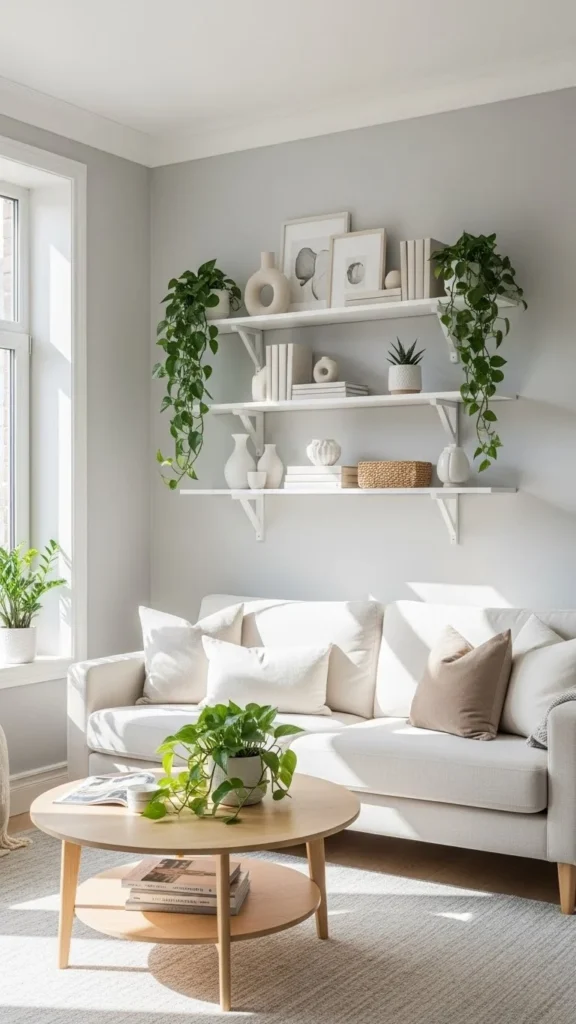
Whether you live in a small apartment, a dorm, or just want better organization, this guide will show you how to use floating shelves smartly and beautifully.
Why Floating Shelves Are Perfect for Vertical Space
Floating shelves work because they’re visually light but highly functional. Unlike bulky cabinets, they don’t overwhelm a room.
Key benefits:
- They draw the eye upward, making rooms feel taller
- They create storage without using floor space
- They’re affordable and easy to install
- They work in almost every room
From kitchens to bedrooms, floating shelves help you reclaim unused wall space while keeping everything accessible.
Choose the Right Wall for Maximum Impact
Not every wall needs shelves—but the right wall can transform a room.
Great places to install floating shelves:
- Above sofas or beds
- Over desks or workstations
- Empty walls in hallways
- Above toilets or washing machines
- Kitchen walls between cabinets
Avoid walls that already feel visually busy. Floating shelves shine best on clean, open surfaces.
Go Vertical, Not Just Horizontal
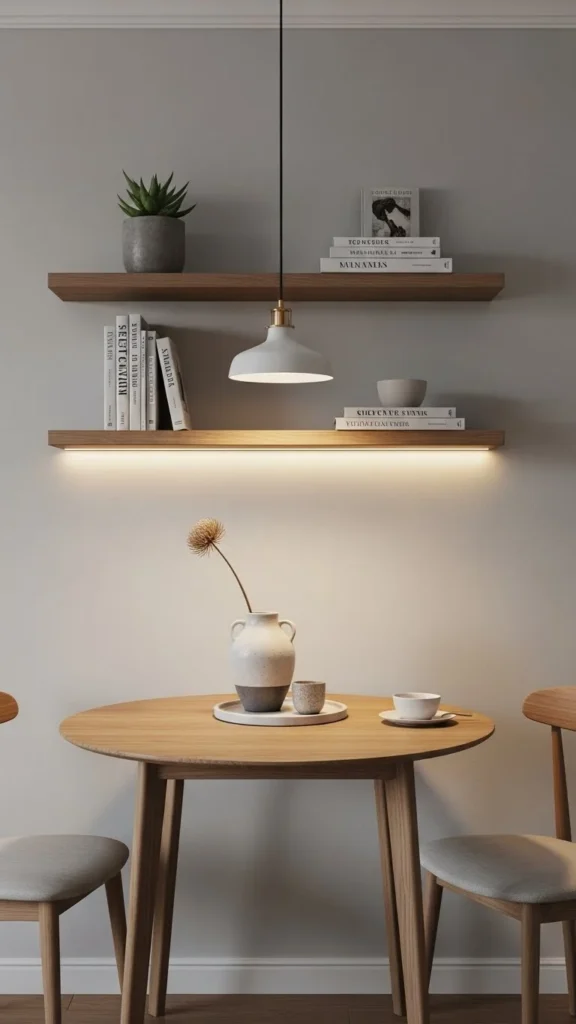
Most people install one shelf and stop there—but stacking shelves vertically is where the real space-saving magic happens.
Tips for vertical shelf layouts:
- Use 2–4 shelves aligned straight up
- Keep equal spacing between shelves (10–14 inches)
- Place heavier items on lower shelves
- Reserve top shelves for decor or rarely used items
This approach maximizes storage while keeping the look organized and intentional.
Style Shelves Without Making Them Look Cluttered
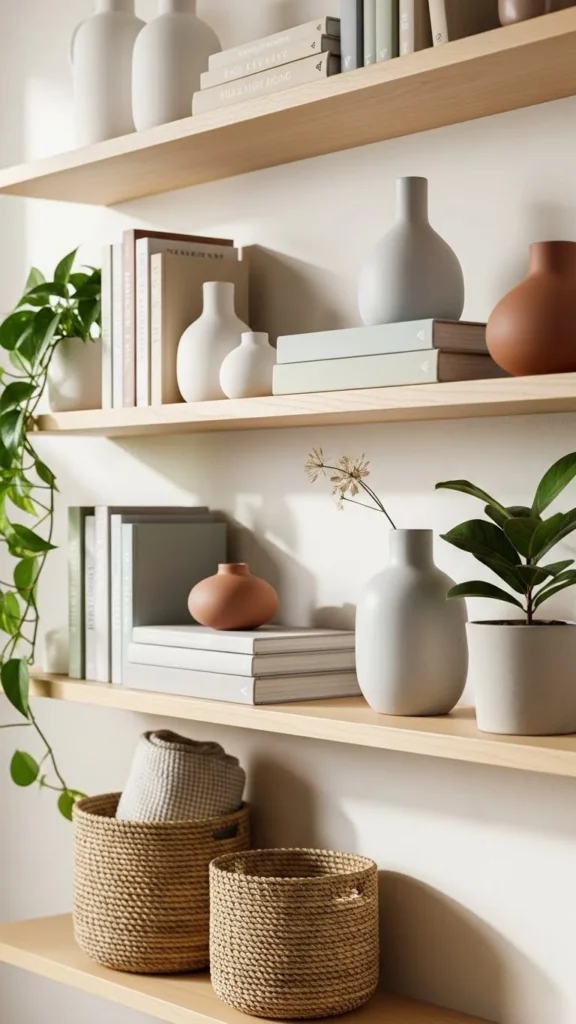
Floating shelves should feel curated, not chaotic. The key is balance.
Simple shelf styling formula:
- Books (stacked vertically and horizontally)
- One statement decor piece (vase, sculpture, frame)
- A small plant for softness
- One functional item (basket, box, jar)
Stick to a limited color palette to keep things calm—especially in small rooms.
Use Floating Shelves Room by Room
Floating shelves adapt beautifully to different spaces when used with intention.
Living Room
- Display art, books, and decor above seating
- Create a mini gallery wall using shelves
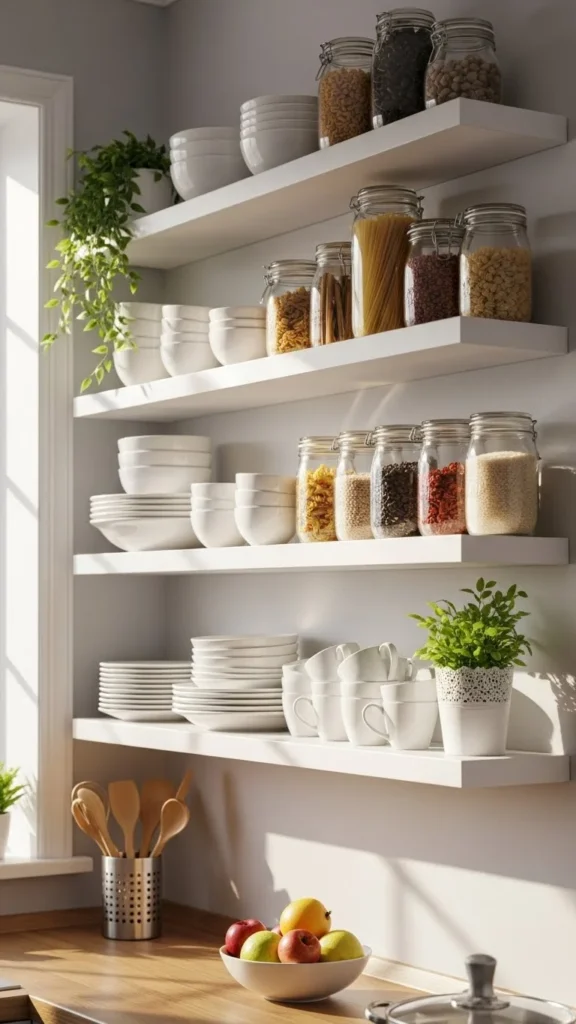
Kitchen
- Store everyday dishes, mugs, and spices
- Use open shelves to replace upper cabinets
Bedroom
- Replace bulky nightstands with small shelves
- Add shelves above dressers for accessories
Bathroom
- Store towels, toiletries, and candles
- Install shelves above the toilet for extra storage
Home Office
- Keep supplies off your desk
- Use shelves for books and decorative motivation
Pick the Right Shelf Material and Size
Material matters more than you think—especially when shelves are mounted high.
Popular shelf materials:
- Wood: warm, timeless, and versatile
- Metal: modern and industrial
- Glass: great for small spaces (feels lighter)
Sizing tips:
- Narrow shelves (6–8 inches deep) work best in tight areas
- Thicker shelves feel more substantial in living rooms
- Always check weight limits before loading
Installation Tips for Safety and Style
Floating shelves look effortless—but proper installation is crucial.
Quick installation checklist:
- Use wall anchors or mount into studs
- Double-check level alignment
- Keep consistent spacing
- Avoid overcrowding shelves
If shelves feel unstable, remove weight immediately and reinforce them.
Make Shelves Part of Your Decor Story
Think of floating shelves as design elements, not just storage. Match them with your room’s style—modern, boho, minimalist, or cozy.
You can:
- Paint shelves the same color as the wall for a seamless look
- Use contrasting shelves to create visual interest
- Swap decor seasonally for a fresh feel
Final Takeaway
Floating shelves are one of the smartest ways to maximize vertical space without sacrificing style. With the right placement, layout, and styling, they can completely transform how a room looks and functions.
Save this idea for later and start looking at your walls as opportunities—not empty space ✨
Leave a Reply